
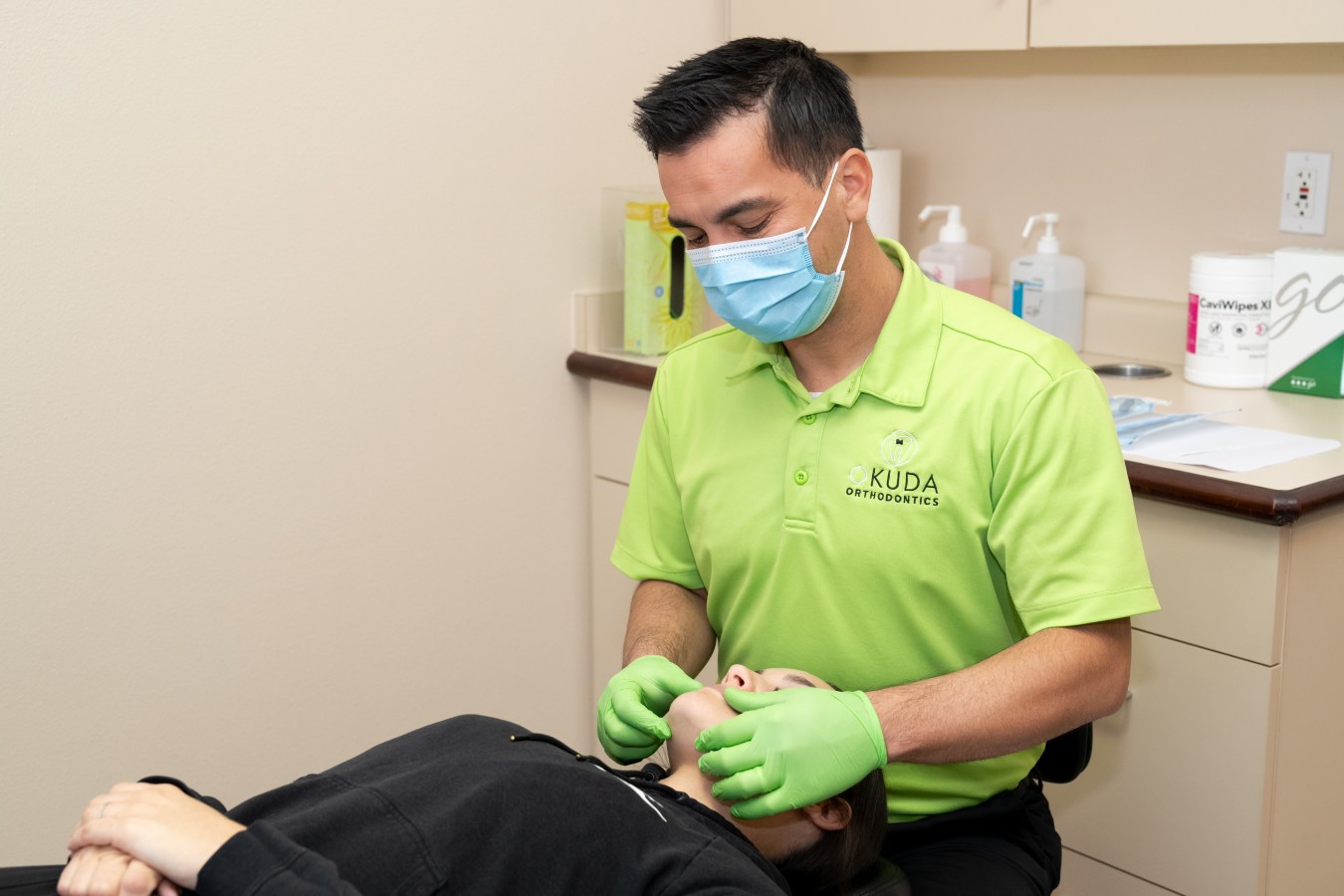
What Parents Should Look for Before Their Child’s First Visit
Picking an orthodontist for your kid isn’t something you want to get wrong. You want someone who knows what they’re doing, makes your child feel comfortable, and gives you straight answers about what’s actually needed. For families in Henderson, NV, here’s what to look for before you book that first visit.
What Is a Pediatric Orthodontist and Why Does It Matter?
A pediatric orthodontist is a dental specialist who diagnoses and treats alignment issues in children’s teeth and jaws. After dental school, these specialists complete two to three additional years of residency training focused on bite correction, jaw growth, and tooth movement in developing mouths. Many also pursue board certification through the American Board of Orthodontics, which demonstrates a higher level of commitment to their specialty. The American Association of Orthodontists recommends every child have their first orthodontic evaluation by age seven.
This focused training separates pediatric orthodontists from general dentists, who provide cleanings, fillings, and overall oral health care but aren’t trained specifically in alignment or bite correction.
What does that extra residency cover? They study jaw growth patterns, tooth movement mechanics, and developing facial structures, all specific to children whose bones haven’t finished growing yet.
Your family dentist is key to your child’s oral health, but they aren’t trained in bite correction or alignment. That’s why dentists often refer children to orthodontists when they spot concerns. At Henderson, NV practices like Okuda Orthodontics, Dr. Okuda sees kids at age seven because they have a mix of baby teeth and permanent teeth, giving a clear view of how things are developing.
Here’s something that surprises many parents: an early evaluation doesn’t automatically mean early treatment. Often, it simply means your child gets monitored over time so any issues can be addressed at the ideal moment.
How a Pediatric Orthodontic Consultation Works: Step by Step
Knowing what to expect takes the mystery out of that first visit. Here’s how a typical pediatric orthodontic consultation unfolds:
- Check-in and welcome. Your child will be greeted by the front desk team. Expect some paperwork about dental history and any concerns you’ve noticed.
- Visual examination. The orthodontist looks at your child’s teeth, jaw, and how the bite comes together, checking for crowding, spacing, and alignment issues.
- Diagnostic imaging. Many practices use state-of-the-art 3D scanning technology to see what’s happening beneath the surface. These systems produce a three-dimensional view of teeth and jaw structure that traditional 2D imaging can’t match. Ask whether the practice you’re considering uses 3D scanning.
- Photo documentation. Pictures of your child’s face, teeth, and smile help track changes over time and support custom smile design.
- Discussion of findings. The orthodontist sits down with you and your child to explain what they’ve observed, whether treatment is needed now, whether monitoring makes more sense, or if everything looks fine.
- Custom smile design. If intervention is recommended, you’ll receive a custom smile design outlining the approach, timeline, and what to expect.
Before your first visit, jot down any concerns. Does your child have trouble chewing? Do they breathe through their mouth at night? Has thumb-sucking been hard to break? These details help the orthodontist get the full picture.
Benefits of Seeing a Pediatric Orthodontist Early
Getting your child evaluated early gives you options that may not be available later. At Okuda Orthodontics in Henderson, NV, Dr. Okuda recommends early evaluation so families can plan ahead with confidence.
Why Does Early Evaluation Matter?
- Catching issues before they compound. Crossbites, severe crowding, and jaw growth irregularities are easier to address when bones are still developing. What might require surgery in an adult can sometimes be corrected with appliances in a child.
- Two-phase treatment options. Some children benefit from early intervention (Phase 1) followed by full treatment during the teen years (Phase 2). This approach can reduce the complexity and duration of later work.
- Confidence during formative years. Kids notice their smiles. When teeth are visibly misaligned, it can affect how they feel about themselves during critical social development years.
How Can Early Treatment Reduce Future Costs?
- Straight teeth are easier to clean. Proper alignment reduces the risk of cavities, gum disease, and uneven wear on tooth surfaces. Fewer dental issues over time means fewer dental bills.
- What about treatment duration? When issues are caught early, the full treatment phase often goes faster, meaning less time in braces and fewer adjustments. That directly affects total cost.
- Early intervention at the right time may help your child avoid extractions, jaw surgery, or extended Phase 2 treatment as a teenager. Each of those avoided interventions represents real savings.
Early evaluation is about having information, not rushing into treatment. The goal is making sure you know what’s happening in your child’s mouth so you can make informed decisions at the right time.
Pediatric Orthodontist vs. General Dentist: Who Should Treat Your Child?
Parents sometimes wonder whether their family dentist can handle orthodontic work. Here’s a clear breakdown:
| Factor | General Dentist | Pediatric Orthodontist |
|---|---|---|
| Primary focus | Cleanings, fillings, overall oral health | Teeth alignment and bite correction |
| Specialized training | Dental school (4 years) | Dental school + orthodontic residency (2-3 additional years) |
| Imaging technology | Standard imaging | State-of-the-art 3D scanning, cephalometric analysis |
| Treatment scope | May offer basic aligners | Braces, Invisalign, appliances, and complex bite correction |
| Experience with growth | General pediatric dentistry | Specialized in jaw development and tooth eruption patterns |
| Complex cases | Typically refers out | Trained to manage difficult alignment and skeletal issues |
Some general dentists offer basic aligner treatment, but they lack the specialized training needed for growing children with developing jaws. A pediatric orthodontist knows how to use your child’s natural growth to their advantage.
The best scenario? Your dentist and orthodontist working as a team. Your dentist keeps teeth healthy and cavity-free while your orthodontist handles alignment.
When your child has anything beyond minor spacing issues, a board-certified orthodontist brings the clinical precision that makes a real difference in outcomes. Board certification through the American Board of Orthodontics means the orthodontist has voluntarily completed additional examinations beyond their residency training.
What Affects the Cost of Pediatric Orthodontic Treatment?
Several factors determine what you’ll pay for pediatric orthodontic treatment. The biggest ones are the type of braces or aligners used, how complex the case is, how long treatment lasts, your insurance coverage, and what payment options the practice offers. Here’s a closer look.
Braces and Invisalign come with different price points. Metal braces are often the most affordable option, while Invisalign may cost more depending on the case.
A child with mild crowding will likely pay less than one with a severe overbite requiring extended treatment. More visits and longer treatment times affect the overall cost. Many dental insurance plans include orthodontic benefits for children, covering a portion of treatment costs. Check your plan’s specifics, including lifetime maximums and age limits.
Most practices offer flexible payment plans that help families spread costs out over time. Some provide online payment calculators so you can explore options before your first visit. Third-party financing programs are also widely available for families who need extra flexibility.
At Okuda Orthodontics, your first visit is complimentary. You’ll receive a cost estimate with no obligation, so you can make an informed decision without pressure.
Don’t let cost concerns keep you from getting your child evaluated. The initial consultation costs nothing, and you might be surprised at how manageable treatment can be with the right payment plan.
8 Signs Your Child May Need to See an Orthodontist
Not sure if your child needs an evaluation? Watch for these indicators:
- Early or late loss of baby teeth. Teeth falling out too soon or hanging on too long can signal underlying alignment issues.
- Difficulty chewing or biting. If your child avoids certain foods or complains about eating, their bite might not be coming together properly.
- Chronic mouth breathing. Mouth breathing during sleep especially can indicate jaw development issues that affect airway and alignment. This is one parents often overlook.
- Thumb-sucking past age five. Prolonged sucking habits can push teeth out of position and affect jaw growth.
- Visibly crowded or misaligned teeth. When teeth overlap, twist, or have no room to come in straight, orthodontic intervention is usually needed.
- Protruding front teeth. Front teeth that stick out are more vulnerable to injury and often indicate bite issues that need correction.
- Jaw clicking, popping, or shifting. Sounds or movement when your child opens and closes their mouth suggest the jaw isn’t aligned correctly.
- An uneven bite. When your child closes their mouth, do the top and bottom teeth meet evenly? An open bite, crossbite, or underbite needs professional attention.
According to the American Association of Orthodontists, roughly 75 percent of kids and teens could benefit from some form of orthodontic treatment. If you’ve noticed any of these signs, scheduling an evaluation with a Henderson, NV orthodontist is a smart next step.
Frequently Asked Questions About Pediatric Orthodontics
At what age should my child first see an orthodontist?
The American Association of Orthodontists recommends age seven. By then, enough permanent teeth have come in to identify potential issues, and jaw growth can be assessed. This doesn’t mean treatment starts at seven. It means you’ll have the information needed to plan ahead.
Does my child need a referral from a dentist?
No. You can schedule a first visit directly with an orthodontist whenever you have concerns. Many dentists do refer patients when they spot alignment issues during regular checkups, and that collaborative approach benefits your child.
What is two-phase orthodontic treatment?
Two-phase treatment splits orthodontic care into two stages. Phase 1 (early intervention) typically happens between ages seven and ten. Phase 2 follows once most permanent teeth have erupted, usually in the teen years. Phase 1 addresses specific issues like crossbites or severe crowding, while Phase 2 fine-tunes the final alignment.
Can children get Invisalign instead of braces?
Yes. Invisalign for Kids is designed specifically for younger patients with a mix of baby teeth and permanent teeth. Not every child qualifies, but many do. During your first visit, the orthodontist will discuss which options work best for your child’s specific situation.
How long does pediatric orthodontic treatment typically last?
It depends on the case. Most children wear braces or aligners for 12 to 24 months. Some cases resolve faster, while others with significant bite issues may take longer. Your orthodontist will give you a realistic timeline during your first visit.
What should I bring to my child’s first visit?
Bring your dental insurance information, any 3D scans or imaging from your child’s dentist (if available), and a list of questions or concerns. It also helps to note any habits like thumb-sucking or mouth breathing, as well as any family history of orthodontic treatment.
How do I find a good pediatric orthodontist in Henderson, NV?
Look for a board-certified orthodontist with specific experience treating kids. Ask about the technology they use, whether they offer complimentary first visits, and how they handle communication with your child’s dentist. Reading reviews from other Henderson families can also give you a sense of the practice culture and how comfortable kids feel there. Okuda Orthodontics, for example, offers a complimentary first visit so you can see the practice firsthand before making any decisions.