
What Does an Orthodontist Do, and Why Does Choosing the Right One Matter?
An orthodontist is a dental specialist who completes two to three years of residency training after dental school, focusing on the diagnosis, prevention, and treatment of dental and facial irregularities, including conditions like malocclusion, crowding, spacing, and jaw misalignment. For families weighing their options, understanding what sets an orthodontist apart from other providers is the first step toward making a confident decision.
While your general dentist handles cleanings, fillings, and overall oral health, an orthodontist focuses exclusively on straightening teeth and correcting bite issues. This distinction matters more than you might think.
Orthodontists treat conditions like malocclusion (misaligned bite), crowding, spacing issues, and jaw alignment concerns. They understand how teeth, bones, and facial muscles work together over time.
Why does choosing the best orthodontist matter so much? Consider what’s at stake:
- A skilled specialist can spot subtle issues that others might miss.
- The right recommendation for your specific situation can save you time and money.
- If complications arise, you’re in capable hands.
- Treatment done well the first time means fewer corrections later.
Your smile is something you’ll carry for life. The orthodontist you choose shapes that outcome.
How to Evaluate and Choose the Best Orthodontist: A Step-by-Step Approach
Finding the right orthodontist takes some research. Here’s how to break it down.
How Do I Verify an Orthodontist’s Credentials?
Start with the basics. Look for board certification from the American Board of Orthodontics (ABO). This certification means the orthodontist has passed rigorous examinations beyond their residency training. Membership in the American Association of Orthodontists (AAO) indicates a commitment to continuing education and ethical practice. These two credentials, board certification and AAO membership, are the strongest signals of a qualified specialist.
Dr. Brady Okuda holds board certification from the ABO and maintains active AAO membership, practicing at Okuda Orthodontics.
What Treatment Options Should a Quality Practice Offer?
A quality orthodontic practice offers multiple treatment approaches. You want options, not the same plan handed to every patient. Look for practices that provide:
- Metal and ceramic braces
- Invisalign
- Two-phase treatment for younger patients
- Solutions for complex cases including jaw alignment
Modern Technology and Better Diagnoses
Today’s orthodontics relies on specific diagnostic tools. Digital scanning eliminates messy impressions. 3D imaging systems like the i-CAT™ provide detailed views of teeth, roots, and bone structure that traditional X-rays can’t match. These technologies lead to more accurate custom smile design and better confident smiles.
Reading Between the Lines in Patient Reviews
What do actual patients say? Look for patterns in reviews. Do people mention feeling comfortable and well-informed? Are there comments about the team’s communication? Pay attention to how the practice handles concerns or complications. Consistent praise across dozens of reviews tells you more than any single five-star rating.
Why Should I Schedule a Free Consult?
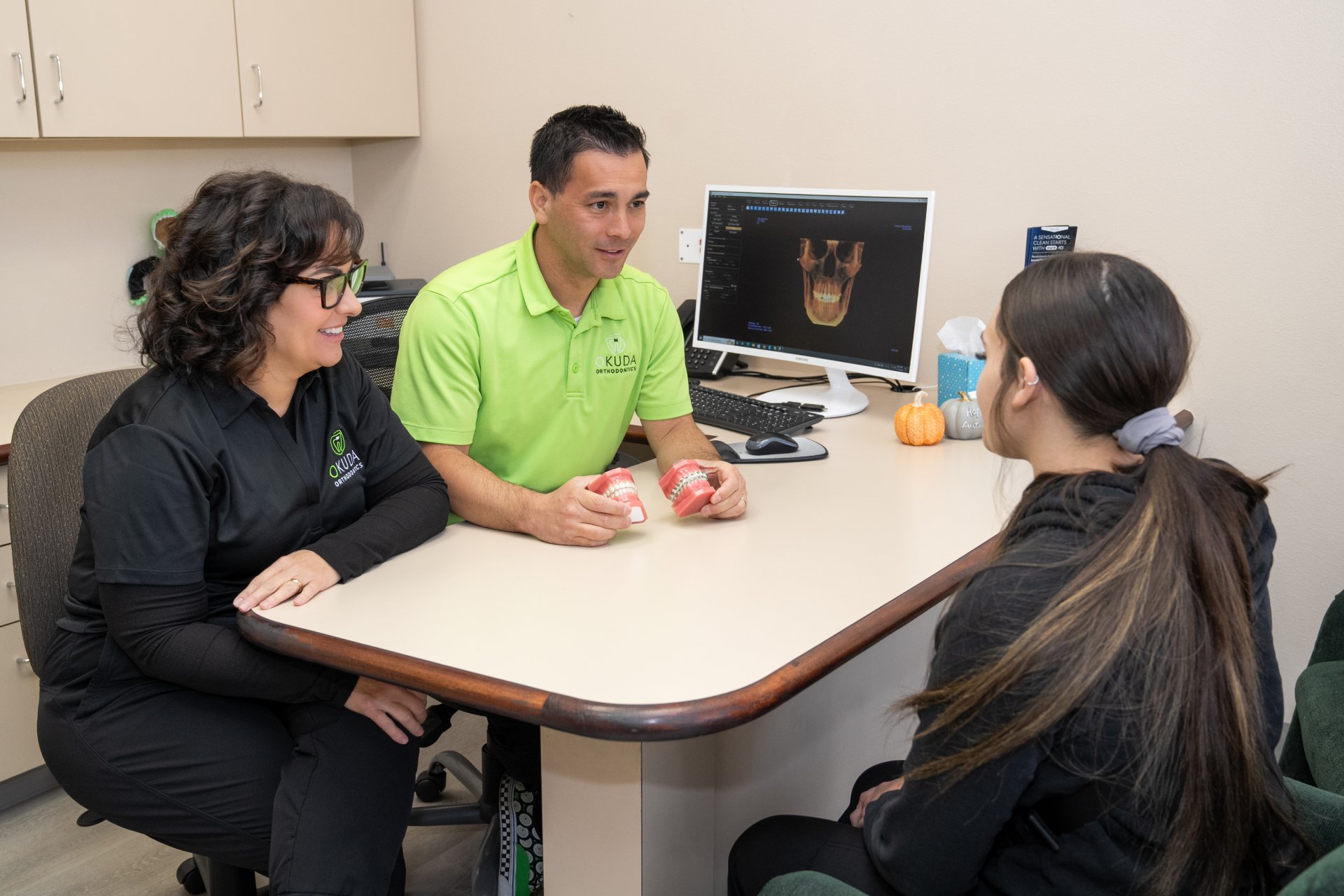
Nothing replaces an in-person visit. A free consult lets you experience the office environment, meet the team, and ask questions directly. Notice how the orthodontist explains things. Do they take time with your questions? Do you feel heard?
Trust your instincts. You’ll be visiting this office regularly for months or years. The best orthodontist for you is someone you genuinely feel comfortable with.
Key Benefits of Choosing a Highly Qualified Orthodontist
Working with an experienced, board-certified orthodontist makes a real difference in your treatment and your confident smiles.
The Value of an Accurate Diagnosis
Picture this: you start treatment, and six months in, your orthodontist discovers a bite issue that wasn’t caught during the initial exam. Now your timeline extends, your costs increase, and your frustration grows. A thorough initial exam prevents exactly this scenario.
When your orthodontist understands exactly what needs correction, treatment moves more efficiently. At Okuda Orthodontics, Dr. Okuda uses 3D imaging and detailed clinical evaluation to catch issues early, which means fewer mid-course corrections and a clearer path to your confident smiles.
How Does the Right Treatment Fit Your Life?
Every smile is different. An orthodontist with broad training can match you with the approach that fits your lifestyle, budget, and clinical needs. Sometimes that’s Invisalign. Sometimes braces work better. A qualified specialist helps you understand why one option suits your case over another. This is where a custom smile design really matters, because your plan should reflect your goals, not a template.
Less Discomfort with Modern Tools
3D scanning and digital planning mean fewer adjustments and more precise tooth movement. Modern brackets and wires work more gently than older systems. The result? Less soreness and shorter first visits. Board-certified orthodontists like Dr. Okuda pair clinical precision with these tools to keep your experience as comfortable as possible.
Complex Cases Need Specialist Training
Severe crowding, significant bite concerns, and TMJ issues require specialized knowledge. Board-certified orthodontists train specifically for these challenges. They can coordinate with oral surgeons when needed and manage complications confidently. This is where the difference between a general dentist offering aligners and a specialist with thousands of hours of focused training becomes most apparent.
Quality Results That Last
Quality orthodontic care produces stable outcomes. When treatment is done right the first time, you’re less likely to need retreatment down the road. Your investment in a great smile pays off for decades.
Orthodontist vs. Dentist vs. DIY Aligners: Understanding Your Options
You have choices when it comes to straightening your teeth. Understanding the differences helps you pick the best orthodontist or provider for your needs.
| Provider Type | Training | Supervision | Best For |
|---|---|---|---|
| Orthodontist | Dental school + 2-3 year residency; board certification available | In-person monitoring throughout treatment | All cases, including complex bite and jaw issues |
| General Dentist | Dental school only | In-person, but limited orthodontic training | Minor alignment cases |
| DIY Mail-Order Aligners | Remote oversight only | No in-person exams | Very mild crowding in healthy mouths |
The Orthodontist Advantage
Orthodontists complete thousands of hours of specialized training in tooth movement, facial development, and bite correction. They can offer braces, Invisalign, and coordinate surgical treatment when necessary. Board-certified specialists like Dr. Brady Okuda, who holds ABO certification and AAO membership, monitor your progress in person and adjust your custom smile design as needed. This level of clinical precision is what separates specialist care from the alternatives, and it’s why finding the best orthodontist matters so much for long-term outcomes.
When Do General Dentists Offer Aligners?
Some general dentists provide clear aligners for straightforward cases. This can work well for minor crowding. However, dentists receive limited orthodontic training in dental school. Complex cases benefit from specialist care.
What Are the Risks of DIY Aligners?
Mail-order aligner companies skip the in-person examination. According to the American Association of Orthodontists, moving teeth without proper diagnosis and supervision can cause serious issues. Teeth can become loose. Bite issues can worsen. Root damage can occur.
The AAO recommends that all orthodontic treatment be supervised by a licensed orthodontist who examines you in person.
If you have bite concerns, TMJ discomfort, significant crowding, or any complexity in your case, an orthodontist is your safest choice.
What Affects the Cost of Orthodontic Treatment?
How much will orthodontic treatment cost? The answer depends on four main factors: the type of treatment you choose (braces vs. Invisalign), the complexity of your case, your insurance benefits, and the payment plans available to you. Practices like Okuda Orthodontics help families understand these factors upfront so there are no surprises.
Treatment Type and Price Differences
Metal braces, ceramic braces, and Invisalign each come with different price points. Metal braces are typically the most affordable option. Ceramic braces cost more due to their tooth-colored appearance. Invisalign pricing varies based on case complexity and the scope of your custom smile design. Your orthodontist will walk you through the specifics during your free consult.
Case Complexity and Timeline
A straightforward crowding case requiring twelve months of treatment costs less than a complex bite correction taking two years. Think of it this way: a case that requires moving a few teeth into alignment is fundamentally different from one that involves correcting a deep overbite and significant crowding at the same time. Your orthodontist will explain how your specific needs affect the timeline and investment.
Insurance Coverage and Payment Options
Many dental insurance plans include orthodontic benefits, especially for patients under 18. Coverage varies widely, so check your specific plan. Your orthodontic team can help you understand your benefits and maximize what’s available to you.
Beyond insurance, quality orthodontic care should be accessible. Look for practices offering flexible payment plans that fit your budget. Care that fits you starts with knowing what to expect financially.
Why Cutting Corners Costs More Later
Bargain orthodontics can end up costing more than doing it right the first time. Retreatment alone can run several thousand dollars, and that doesn’t count the extra months in braces or aligners. Incomplete treatment and unresolved bite issues often lead to additional dental work later. Choosing the best orthodontist from the start typically saves money over time.
Who Should See an Orthodontist? Candidacy for Kids, Teens, and Adults
Children, teens, and adults can all benefit from orthodontic treatment. The best time to start depends on your individual situation. Confident smiles at every age. That’s the goal.
The Right Age for a First Evaluation
The American Association of Orthodontists recommends children have their first orthodontic evaluation by age seven. At this age, adult teeth are beginning to emerge and potential issues become visible.
Early evaluation doesn’t always mean early treatment. Sometimes the orthodontist simply monitors growth until the right time. But catching certain things early can simplify future treatment and guide healthy development. At Okuda Orthodontics, Dr. Okuda sees kids for these early evaluations and creates a monitoring plan when active treatment isn’t yet needed.
Teen Treatment: Timing and Social Comfort
Most permanent teeth have erupted during the teen years, and jaw growth is still active. Both braces and Invisalign work well for teens. Here’s something parents appreciate: many of their teen’s friends are going through treatment too, which makes the experience feel more normal. Teens often surprise their parents with how quickly they adapt.
Adults: It’s Never Too Late
Maybe you never had the opportunity as a kid. Maybe your teeth have shifted over time. Whatever the reason, age is rarely a barrier to orthodontic treatment. Plenty of adults are choosing to invest in their smiles later in life, and the results speak for themselves.
Adults often prefer Invisalign for its discreet appearance, but braces remain an excellent option for complex corrections. A smarter way to smile is available no matter when you start.
Special Considerations Worth Knowing
Patients experiencing TMJ discomfort, jaw clicking, or chronic headaches may benefit from an orthodontic evaluation. Bite issues can contribute to these symptoms. An orthodontist can determine whether treatment might help.
A free consult is the best way to learn whether orthodontic treatment is right for you or your child.
Frequently Asked Questions About Finding the Best Orthodontist
What qualifications should I look for in an orthodontist?
Look for board certification from the American Board of Orthodontics, which indicates the orthodontist has completed additional testing beyond their residency. AAO membership shows commitment to the specialty. Ask about continuing education and years of experience as well.
How do I know if I need braces or Invisalign?
Both options correct alignment and bite issues effectively. The best choice depends on your specific case, lifestyle, and preferences. Invisalign offers discretion and removability, while braces provide precise control for complex movements. Your orthodontist will recommend the approach most likely to achieve your goals as part of your custom smile design.
Is it worth seeing an orthodontist instead of using mail-order aligners?
For most patients, yes. Mail-order aligners skip the in-person examination that identifies underlying issues. An orthodontist monitors your progress and adjusts treatment as needed. The AAO strongly recommends in-person supervision for all orthodontic treatment.
What should I expect at my first orthodontic visit?
Your first visit begins with a thorough examination including digital scans or X-rays. The orthodontist will evaluate your teeth, bite, and jaw alignment. You’ll discuss your concerns and goals, then receive treatment recommendations, timeline estimates, and cost information.
How long does orthodontic treatment typically take?
Treatment length varies based on case complexity. Many patients complete treatment in twelve to twenty-four months. Simple cases may finish sooner, while complex cases requiring significant movement may take longer. Your orthodontist will provide an estimate based on your specific case during your free consult.